
That score is your telomere count. Although many of us eat and maintain a healthy life style to look and feel better, there is a superior reason. That is to be BETTER and live LONGER. One can be productive and happy as a centurion (living 100+ years). How does one know how long and well they will live? Now there is a laboratory study for it, called TELOMERE TESTING. Until recently, the test was prohibitively expensive, but now for less than $400, one can obtain their report card and intervene on life style to get a better and better score to either achieve their goal or come very close to it. The Telomere test is a simple fasting or non-fasting blood test that can be carried out in most doctor’s office. For more information contact Doug Sloan (405-227 2112) or go on line to Spectocell.com.
Telomeres are sections of DNA at the end of each chromosome whose primary function is to prevent chromosomal “fraying” when a cell replicates. As a cell ages, its telomeres become shorter. How much shorter is governed by genetic factors and environmental stressors. Eventually, the telomeres become too short to allow cell replication, the cell stops dividing and will ultimately die which is a normal biological process. The more of our cells die, the older and frailer we become until we ourselves die. If our reserve is depleted, we succumb to disease or just old age. The Telomere Test can determine the length of your telomeres in relation to the chronological age. The Telomere Score is calculated based on the telomere length on white blood cells (T-lymphocytes). This is the average compared to telomere length on lymphocytes from a sample of the American population of the same age. The higher the telomere score, the “younger” the cells and the longer and better that person will live. Yearly, the test can be repeated and one can work harder or do other interventions that will enhance their score and their life.
Although we cannot change our genes we now can modify their expression by Lifestyle. In a study published in Nature this January scientists found the body activates a gene (P 53) that under stress shuts down our cells' normal growth and division cycle by controlling the telomere length. Diet plays a large role in this process. Micronutrients have been shown to have epigenetic effects by methylation of our DNA. The best but the most difficult is becoming a CRONI, (Caloric Restriction Optimal Nutritional Intake) to the point of just sustenance, a step away from starvation with just nutrient dense foods. Far easier and almost as good is eating correctly for your Apo E type, going easy on meat, with eating whole nutrient dense foods, as raw as possible, consumption of Omega 3s, and staying away from grains and processed foods. According to a study in the January 20, 2010 issue of JAMA, increased telomere and survival rates occurred among individuals with high dietary intake of marine omega-3 fatty acids and established cardiovascular disease. In this 5-year study, the researchers found that individuals with the lowest DHA+EPA experienced the most rapid rate of telomere shortening, whereas those in the highest had the slowest rate of shortening. Levels of DHA+EPA were associated with less telomere shortening before and after sequential adjustment for established risk factors and potential confounders. For each 1-standard deviation increase in red cell Omega 3 levels was associated with a 32 percent reduction in the odds of telomere shortening! Although both EPA and DHA are healthy, it seems that DHA is better. So consuming Tuna or Calamari Oil, which has a 4 to 1 ratio of DHA to EPA, is superior than any of the marine oils. What we eat and supplement today becomes the biology of our future.
Minimizing emotional (psychological) and physiological (infections, trauma and surgery) stress will keep your telomeres longer and you healthier. Additionally, increasing antioxidants slows telomere shortening. Physical exercise with adequate antioxidants will also give longer telomeres. Common sense dictates that decreasing cardiovascular risk factors (Lipids, Homocysteine, Blood Pressure, Hs-C Reactive Protein, Glucose etc.) and correcting micronutrient deficencies such as Vitamins, Minerals, and Glutathione will preserve the telomere length. Periodically getting rid of our poison buildup by colonic, and liver cleanses and from the skin by sweating (artificially by sauna or by heavy exercise) and minimizing the toxins in our water, air and food will go a long way in keeping our telomeres longer. Keeping our hormones (Thyroid, Sex and Adrenal hormones) in balance and not getting sick also keeps our telomeres longer. To not get sick means keeping our immune system healthy to include the consumption of Pre and Probiotics. Surgery should be only for life saving problems and not for elective procedures since the operation and the anesthesia shortens the telomeres. Staying out of harms' way for bodily damage in our daily pursuits such as not over indulging in alcohol and dangerous sports and occupations will keep our telomeres and our lives longer.
Although it is far better to live a healthy life style, there are drugs that also have been shown to decrease our telomere shortening. The antihypertensives, Angiotension Converting Enzyme drugs such as Lisinopril and the Angiotension Recepter Blockers like Lorsartan have been shown to extend our telomeres. Likewise so has the Cholesterol lowering Statins. These drugs should be used judiciously, not to lower our lipids too much and to take concomitantly CoEnzyme Q 10. Also the diabetic medicine, Metformin, has been shown to be antiaging. But with this drug many physicians recommend using B12 too. Age is how old we are, but old is what our body is biologically. In reality it is not how old you are, but how you are when you are old that counts!
Sunday, April 3, 2011

Monday, March 7, 2011
CHIROPRACTIC
Nowadays, Chiropractic medicine is an accepted paradigm of health care and treatment. But it was not always like that. Today our society considers these practitioners as in a health care discipline that emphasizes diagnosis, treatment and prevention of mechanical disorders of the vertebrae under the hypothesis that these disorders affect general health via the nervous system. The main chiropractic treatment involves manipulation of the spine, other joints, and soft tissues; treatment also includes exercises and health and lifestyle counseling.
D.D. Palmer founded chiropractic in the 1890s and his son B.J. Palmer helped to expand it in the early 20th century. It has two main groups: "straights", now the minority, emphasize vitalism, innate intelligence and spinal adjustments, and consider vertebral subluxations to be the cause of all disease; "mixers" are more open to mainstream and alternative medical techniques such as exercise, massage, and nutrition. With the advent of X-Ray and the noise of a joint going back into the proper position, Chiropractic is here to stay! The so called pop is caused by the tendons or in the back the apophyseal joint causing a vacuum as it is pulled and suddenly let go-in physics called a cavitation.
The premise of chiropractic assumes a vertebral subluxation or spinal joint dysfunction interferes with the body's function and its Innate Intelligence. This vitalistic concept states that all life contains Innate Intelligence and that this force is responsible for the organization, maintenance and healing of the body. Removal of the interference to the nervous system spinal adjustment so that when the spine is in correct alignment, Innate Intelligence can act, by way of the nervous system, to heal disease within the body. However, until 1987 Chiropractic was considered a cult by the AMA of which I was a member. My experience though with the profession was that it greatly helped folks with back problems and I frequently referred patients to them.
In 1975, I was approached by the Missouri State Medical Board that my license was at stake if I continued using chiropractors as part of the “healing profession”. I was incensed that I could not practice what I thought was best for my patient. Most MDs then thought that if time and physical therapy did not work, then give heavy pain meds or sent them to orthopedic surgeons. Many were operated on and suffered a “failed back”. I was so disturbed by this that I testified in Chicago in 1976, with Chester Wilk and four other chiropractors against the AMA and several nationwide healthcare associations. This was finally resolved in 1987 after a second trial that Chiropratic did help folks indeed and in need.
The triad of Innate Intelligence, Force, and Matter espoused by Palmer a hundred years ago has gone by the wayside. Modern chiropractors study these principles in college and these ideas are seen as historical references to early chiropractic philosophy and pseudoscience. Chiropractors in Australia, England and Germany are Medical Doctors (M.D.s) who specialize in spinal manipulation and many of the techniques used by their American counterparts. A profession that originally did similar healings, the Osteopaths, but now do very little Osteopathic Manipulative Therapy took some of the slack here up. They mostly practice what we as MDs do. After four years of postgraduate (Chiropractic School) training, the student is awarded a Doctorate in Chiropractic- a D.C. Until recently most schools were privately funded, but now they are beginning to see them as part of Universities. Chiropractic is here to stay in America and I feel it is part of the holistic movement of good patient care.
D.D. Palmer founded chiropractic in the 1890s and his son B.J. Palmer helped to expand it in the early 20th century. It has two main groups: "straights", now the minority, emphasize vitalism, innate intelligence and spinal adjustments, and consider vertebral subluxations to be the cause of all disease; "mixers" are more open to mainstream and alternative medical techniques such as exercise, massage, and nutrition. With the advent of X-Ray and the noise of a joint going back into the proper position, Chiropractic is here to stay! The so called pop is caused by the tendons or in the back the apophyseal joint causing a vacuum as it is pulled and suddenly let go-in physics called a cavitation.
The premise of chiropractic assumes a vertebral subluxation or spinal joint dysfunction interferes with the body's function and its Innate Intelligence. This vitalistic concept states that all life contains Innate Intelligence and that this force is responsible for the organization, maintenance and healing of the body. Removal of the interference to the nervous system spinal adjustment so that when the spine is in correct alignment, Innate Intelligence can act, by way of the nervous system, to heal disease within the body. However, until 1987 Chiropractic was considered a cult by the AMA of which I was a member. My experience though with the profession was that it greatly helped folks with back problems and I frequently referred patients to them.
In 1975, I was approached by the Missouri State Medical Board that my license was at stake if I continued using chiropractors as part of the “healing profession”. I was incensed that I could not practice what I thought was best for my patient. Most MDs then thought that if time and physical therapy did not work, then give heavy pain meds or sent them to orthopedic surgeons. Many were operated on and suffered a “failed back”. I was so disturbed by this that I testified in Chicago in 1976, with Chester Wilk and four other chiropractors against the AMA and several nationwide healthcare associations. This was finally resolved in 1987 after a second trial that Chiropratic did help folks indeed and in need.
The triad of Innate Intelligence, Force, and Matter espoused by Palmer a hundred years ago has gone by the wayside. Modern chiropractors study these principles in college and these ideas are seen as historical references to early chiropractic philosophy and pseudoscience. Chiropractors in Australia, England and Germany are Medical Doctors (M.D.s) who specialize in spinal manipulation and many of the techniques used by their American counterparts. A profession that originally did similar healings, the Osteopaths, but now do very little Osteopathic Manipulative Therapy took some of the slack here up. They mostly practice what we as MDs do. After four years of postgraduate (Chiropractic School) training, the student is awarded a Doctorate in Chiropractic- a D.C. Until recently most schools were privately funded, but now they are beginning to see them as part of Universities. Chiropractic is here to stay in America and I feel it is part of the holistic movement of good patient care.
Sunday, February 27, 2011
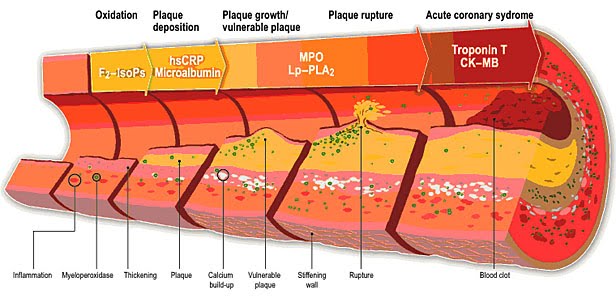
DO YOU KNOW MPO
We all have the enzyme myeloperoxidase, (MPO), in our bodies. But as plaque inside our blood vessel walls becomes more likely to rupture, we produce even more MPO at that site. The increased amounts of MPO, which can be measured in the blood causes erosion of the plaque. When the plaque in the blood vessel erodes enough, it ruptures. There a micro-clot forms to patch the weak spot. Platelets (formed elements) in the blood cells flowing by the clot start participating in growing and firming up this coagulated mass. If that clot blocks blood flow to the heart or brain, a heart attack or stroke usually occurs. A high level of MPO is a signal that a person is in risk of having a catastrophe. This is so even though the cholesterol levels and blood pressure are perfect as in almost fifty percent of these incidents. The MPO oxidizes the LDL cholesterol, modifying so it is more delectable to the certain white cells (macrophages) that reside within the wall of our arteries. These ingest the LDL particles, get sick, die and spill their fatty guts thus enlarging the existing fatty streaks to form an inflammatory plaque. This is the generator of all atherosclerosis. Unbeknownst to most doctors is that Acetaminophen blocks the activity of MPO and stops the transformation of the bad cholesterol (LDL) that is available for the macrophages to ingest.
And Aspirin stops the platelets in our blood from getting sticky, preventing the clump. The basis for the use of low dose aspirin lies in its unique inhibitory effect on a key enzyme, COX-1 (cyclooxygenase-1). In low doses, 81 mg (a child’s aspirin) twice a day, the platelets are less tacky and not as likely to coalesce together to coagulate. However, in higher amounts such as 650 mg (2 adult Aspirins) it affects the arterial walls making them sticky and more likely to initiate a clot on the rough plaque.
A personal friend of mine, Professor Gary Merrill, of Rutgers' department of cell biology and neuroscience, demonstrated significant improvement in acetaminophen-treated hearts compared with non-treated hearts following periods of induced ischemia (reduced blood flow) attributed the rapid post-ischemia recovery of heart muscle and circulation to the antioxidant properties of acetaminophen. This research as part of a growing body of evidence supporting the positive effects of acetaminophen on the cardiovascular system. His findings, together with those of Dr. Addison Taylor of Baylor College of Medicine, Houston, and Professor Phillip Greenspan of the University of Georgia College of Pharmacy, indicate that acetaminophen prevent the damaging effects of LDL cholesterol. Taylor and Greenspan separately conducted investigations showing acetaminophen may protect against the life-threatening condition, hardening of the arteries. The bad press that Acetaminophen has recently had makes this well studied drug almost a curse word. It is true in very high doses like over 6,000 mg a day it can negatively affect the liver and perhaps the kidney, but 1000mg/day is positively healthy for all who want protect their blood vessels.
After the discovery, the Cleveland Clinic, through Cleveland Heart Lab started doing the MPO test. Blood samples, are overnighted to them from the doctors offices, for MPO and four other valuable markers. They include urinary Isoprostain and Microalbumin; a pro-oxidant and an arterial disrupter, HsCRP; indicating lining damage, and Plac2; a predictor of plaque rupture. Many insurance companies and Medicare now cover the test. And for those who don't have coverage, the cost is relatively inexpensive: $189 for MPO and the other tests conducted with it.
If none of the above makes sense to you, still do yourself a favor. Betwixt and between Aspirin and Acetominophen will keep the artery clean-and YOU healthy! If you are a male over the age of 45 or a female over 50-PLEASE take one each of 81 mg Aspirin and 500 mg Acetominophen (Tylenol), both twice a day, it will keep the heart attack and stroke away!!
MPO IN DEPTH
The enzyme myeloperoxidase, (MPO), in our bodies played a role in the past as a defense. But in modern civilization it causes our demise. This intra White Cell enzyme generates reactive oxidants that kills invading microbes. In modern times it hastens plaque build up inside our blood vessel walls. Three mechanisms have been elucidated by the scientists. The MPO oxidizes the LDL cholesterol, modifying it so it is atherogenic. This now bad, bad cholesterol is rapidly ingested by the macrophages that reside within the inside wall (endothelium) of our arteries. These ingest the LDL particles, get sick, die and spill their fatty guts thus enlarging the existing fatty streaks to form an inflammatory plaque. The second mechanism is it oxidizes the endothelial Nitric Oxide that normally keeps these cells healthy. Then this nefarious enzyme weakens the fibrous cover of the plaque, which makes it rupture. There, along with the platelets already in the blood and another enzyme, Plaq2, a micro-clot forms to patch the weak spot. If that clot does not spontaneously dissolve, it blocks blood flow to the heart or brain, a heart attack or stroke usually occurs.
The increased amounts of MPO can be measured in the blood. If greater than 723 pmol/L, there is a 5-fold increase of a catastrophic event even in the absence of other cardiovascular risk factors. But if other risk factors are present a high value makes it much more dangerous. MPO is also used clinically in the Emergency Room to determine if the acute chest pain that the patient is having is a heart attack or not. Another emerging use is that it predicts the severity of heart failure (inability of the heart to pump enough blood) and the prognosis. It is also used to determine the rate of narrowing of the carotid arteries.
Statins decrease MPO levels and Acetaminophen blocks its activity, which stops the transformation of the bad cholesterol (LDL) that is available for the macrophages to ingest. This important test can be done by the Cleveland Clinic, through Cleveland Heart Lab by a special arrangement with a local physician. Blood samples, are overnighted to them for MPO and four other valuable markers. They include urinary Isoprostain and Microalbumin; a pro-oxidant and an arterial disrupter, HsCRP; indicating lining damage, and Plac2; a predictor of plaque rupture. Many insurance companies and Medicare now cover the test. And for those who don't have coverage, the cost is relatively inexpensive: $189 for MPO and the other tests conducted with it.
The increased amounts of MPO can be measured in the blood. If greater than 723 pmol/L, there is a 5-fold increase of a catastrophic event even in the absence of other cardiovascular risk factors. But if other risk factors are present a high value makes it much more dangerous. MPO is also used clinically in the Emergency Room to determine if the acute chest pain that the patient is having is a heart attack or not. Another emerging use is that it predicts the severity of heart failure (inability of the heart to pump enough blood) and the prognosis. It is also used to determine the rate of narrowing of the carotid arteries.
Statins decrease MPO levels and Acetaminophen blocks its activity, which stops the transformation of the bad cholesterol (LDL) that is available for the macrophages to ingest. This important test can be done by the Cleveland Clinic, through Cleveland Heart Lab by a special arrangement with a local physician. Blood samples, are overnighted to them for MPO and four other valuable markers. They include urinary Isoprostain and Microalbumin; a pro-oxidant and an arterial disrupter, HsCRP; indicating lining damage, and Plac2; a predictor of plaque rupture. Many insurance companies and Medicare now cover the test. And for those who don't have coverage, the cost is relatively inexpensive: $189 for MPO and the other tests conducted with it.
Monday, February 21, 2011
PERSONALIZED MEDICINE
One size does not fit all! There is as much genetic variation in the metabolism of drugs, foodstuffs and ingested pollutants as there is in the countenance of humans. Other than identical twins, we each have our facial individual identity and, similarly, each of us metabolizes differently both quantitatively and qualitatively. Our technology has advance to the point that medical science can detect many of the nuances that make us uniquely distinct. This is particularly important so that a physician can prescribe an exact dose of a given drug and particularly when several other medications are given coincidently.
Not only does age, sex, weight, intestinal flora, general health, liver and kidney function alter a patient's response to drugs, but genetic factors must be considered. This information is crucial. Prescription Drug Fatality is the fourth leading cause of death after heart disease, cancer, and stroke. The major determinant involved in the metabolism of drugs, toxins and our hormones is the Cytochrome (CYP) P450 enzymes. The most important of these are CYP2D6, CYP2C9, CYP2C19, NAT2, UGT1A1, DPD, 5HTT, and CYP1A2. The'CYP's is a host of enzymes that use iron to oxidize organic molecules, as part of the body's preparation to dispose of potentially harmful substances by making them more water-soluble. The capital letter indicates the superfamily, and the number before and after, the subfamily.
In humans, CYP3A represents one of the most important subfamilies of the P450 superfamily. The CYP3A subfamily is the most abundantly expressed P450 in human liver, and CYP3A is involved in the biotransformation of approximately 50% of drugs that are metabolized. As a result, drug-drug interactions associated with modulation of CYP3A-mediated metabolism can be of substantial consequence. In the past, it was a trial and error of the dose and the drug we would use. To err could cause not only great harm, but even death of a patient. With this new tool, doctors can take the guess work out of prescribing and do it scientifically.
In addition to our hereditary, the CYPs can be both up-regulated (induced) or down-regulated (inhibited) by other chemicals making it on occasion a complexed proposition for drug deposition. When several competing drugs are use for the same CYP enzyme an Adverse Drug Interaction occurs. At times there are multiple CYPs that work on a drug. For example, adding a hydroxyl group to a medication is the body's strategy to get rid of it and is often followed by joining them to other molecular groups such as glucuronide to increase the solubility even further. Most of the CYP in man is found in the liver, the main organ involved in drug and toxin removal, but a fair amount is also in the small intestine. CYP usually is found in the 'microsomal' part of the cytoplasm (endoplasmic reticulum).
We determine the dose and interaction of not only prescribed drugs, but OTC (over-the-counter) and herbal medicines including those used to treat depression, anxiety, seizures and psychoses; heart disease, cancer, diabetes, and pain. These include medications as Coumadin (warfarin), Prozac, Zoloft, Paxil, Effexor, hydrocodone, Amitriptyline, Claritin, Cyclobenzaprine,, Metoprolol, Tagamet, Tamoxifen, Valium, Carisoprodol, Dilantin, Premarin, and Prevacid (and the over-the-counter drugs, Allegra, and the several NSAIDS).
Almost half of us have genetic variations that affect how we process these drugs. There are four different types of metabolizers, and we all fall into one of these categories for the unpredictable pathways in Cytochrome P450 system. The first type which is the norm, and therefore that person would be an NORMAL Metabolizer and medications prescribed in the usual doses will be handled well by your body. The second type, you would be an INTERMEDIATE metabolizer. This means that you to metabolize the medications more slowly. In this case a lower dosage is needed, and there is a chance of medications building up in your system causing adverse effects. It is especially important to monitor medications if you are in this category. Intermediate metabolizers through the 2C9 pathway, for instance, have an increased risk of bleeding incidences when taking the common blood thinner Coumadin or warfarin. For this reason, screening for CYP2C9 variants may reduce the risk of adverse drug reactions in these patients. The third type is a POOR metabolizer. This type of metabolizer is potentially very dangerous, as there is a great chance for the medication to build up in your system making one very sick, or even death.For example, a poor metabolizer of phenytoin, a common antiepileptic would not be able to process the drug and would actually have toxicity if prescribed this drug. The fourth type of metabolizer is ULTRA EXTENSIVE. In this instance, one would very rapidly excrete the medication. If you were an Ultra Extensive Metabolizer through the 2D6 pathway and one were prescribed a narcotic, there may not be any pain relief because the medication would be metabolized so fast that it would have little or no effect.
PHARMACOGENETIC EFFECT OF CYTOCHROME GENOTYPES
A. PM poor metabolizer, absent or greatly reduced ability to clear or activate drugs. B. IM intermediate metabolizer. Heterozygotes for normal and reduced activity genes. C. EM EuMetabolizer or the Normal Metabolizer. The expected result. D. UM Ultra Metabolizer. Greatly increased activity accelerating clearance or activation.
POPULATION FREQUENCY OF CYTOCHROME P450 (CYP) GENOTYPES
Gene PM IM EM UM
CYP2D6 10% 35% 48% 7%
CYP2C9 2-4% >35% ~60% N/A
CYP2C19 2-20% 24-36% 14-44% 30%
Currently Available Tests:
CYP2D6(cytochrome P450 2D6) acts on one-fourth of all prescription drugs, including the selective serotonin reuptake inhibitors (SSRI), tricylic antidepressants (TCA), betablockers such as Metoprolol and many of the antiarrhythmics. Approximately 10% of the population has a slow acting form of this enzyme and 7% a super-fast acting form. Thirty-five percent are carriers of a non-functional 2D6 allele (half of the gene), especially elevating the risk of ADVERSE DRUG REACTION when these individuals are taking multiple drugs. Drugs that CYP2D6 metabolizes include Prozac, Zoloft, Paxil, Effexor, hydrocodone , amitriptyline, cyclobenzaprine (Flexeril), Coreg, Tagamet, Tamoxifen, and the over-the-counter diphenylhydramine (Benadryl) drugs, Allegra and Claritin. CYP2D6 is responsible for activating the pro-drug codeine into its active form and the drug is therefore inactive in CYP2D6 slow metabolizers.
CYP2C9(cytochrome P450 2C9) is the primary route of metabolism for Coumadin (warfarin). Approximately 10% of the population are carriers of at least one allele for the slow-metabolizing form of CYP2C9 and may be treatable with 50% of the dose at which normal metabolizers are treated. Other drugs metabolized by CYP2C9 include Amaryl, Isoniazid,, Amitriptyline, Dilantin, Hyzaar, THC (tetrahydrocannabinol), NASAIDS, and Viagra.
CYP2C19(cytochrome P450 2C19) is associated with the metabolism of Carisoprodol (Soma), Aprazolam, Dilantin, and Prevacid.
CYP1A2(cytochrome P450 1A2) is associated with the metabolism of Amitriptyline, Resperone, Duloxetine(Cymbalta), Theophylline, Caffeine, Diazepam, Sex Hormones Tamoxifen, and Cyclobenzaprine. Amongst other problems these folks have arrhythmias or get jittery when drinking coffee. Lycopene found in tomatoes reduces the effect of the above drugs and hence need more of a dose.
NAT2(N-acetyltransferase 2) is a secondary drug metabolizing enzyme that acts on Isoniazid, Demnerol, and Azulfidine. The frequency of the NAT2 "slow acetylator" in various worldwide populations ranges from 10% to more than 90%.
DPD (Dihydropyrimidine dehydrogenase) is responsible for the metabolism of Fluorouracil (5-FU), one of the most successful and widely used chemotherapy drugs.
UGT 1A1 (UDP-glucuronosyltransferase) variations can lead to severe even fatal reactions to the first dose of Camptosar (irinotecan).
5HTT (Serotonin Transporter) helps determine whether people are likely to respond to SSRIs, a class of medications that includes Citalopram(Celexa), Fluoxetine(Prosac), Paroxetine(Paxil) and Sertraline
With this tool, no longer is it a trial and error proposition as to what drug and its dose to prescribe, We can now do it scientifically with a much better outcome for the patient. Since our CYP genes do not change, this study is done only once in a lifetime. Although, there are several labratories that do this work. the best and the one that we use is the Seattle based GENELEXR . The test is paid for by most medical insurances and archived on a computer registry to be use with the patient’s permission by their current and future doctor and pharmacist. As a doctor with this science, 21st Century medicine can be practice with a far better outcome than the primitive approach we had taken in the past. Please embrace this technology; it can save your life!
Not only does age, sex, weight, intestinal flora, general health, liver and kidney function alter a patient's response to drugs, but genetic factors must be considered. This information is crucial. Prescription Drug Fatality is the fourth leading cause of death after heart disease, cancer, and stroke. The major determinant involved in the metabolism of drugs, toxins and our hormones is the Cytochrome (CYP) P450 enzymes. The most important of these are CYP2D6, CYP2C9, CYP2C19, NAT2, UGT1A1, DPD, 5HTT, and CYP1A2. The'CYP's is a host of enzymes that use iron to oxidize organic molecules, as part of the body's preparation to dispose of potentially harmful substances by making them more water-soluble. The capital letter indicates the superfamily, and the number before and after, the subfamily.
In humans, CYP3A represents one of the most important subfamilies of the P450 superfamily. The CYP3A subfamily is the most abundantly expressed P450 in human liver, and CYP3A is involved in the biotransformation of approximately 50% of drugs that are metabolized. As a result, drug-drug interactions associated with modulation of CYP3A-mediated metabolism can be of substantial consequence. In the past, it was a trial and error of the dose and the drug we would use. To err could cause not only great harm, but even death of a patient. With this new tool, doctors can take the guess work out of prescribing and do it scientifically.
In addition to our hereditary, the CYPs can be both up-regulated (induced) or down-regulated (inhibited) by other chemicals making it on occasion a complexed proposition for drug deposition. When several competing drugs are use for the same CYP enzyme an Adverse Drug Interaction occurs. At times there are multiple CYPs that work on a drug. For example, adding a hydroxyl group to a medication is the body's strategy to get rid of it and is often followed by joining them to other molecular groups such as glucuronide to increase the solubility even further. Most of the CYP in man is found in the liver, the main organ involved in drug and toxin removal, but a fair amount is also in the small intestine. CYP usually is found in the 'microsomal' part of the cytoplasm (endoplasmic reticulum).
We determine the dose and interaction of not only prescribed drugs, but OTC (over-the-counter) and herbal medicines including those used to treat depression, anxiety, seizures and psychoses; heart disease, cancer, diabetes, and pain. These include medications as Coumadin (warfarin), Prozac, Zoloft, Paxil, Effexor, hydrocodone, Amitriptyline, Claritin, Cyclobenzaprine,, Metoprolol, Tagamet, Tamoxifen, Valium, Carisoprodol, Dilantin, Premarin, and Prevacid (and the over-the-counter drugs, Allegra, and the several NSAIDS).
Almost half of us have genetic variations that affect how we process these drugs. There are four different types of metabolizers, and we all fall into one of these categories for the unpredictable pathways in Cytochrome P450 system. The first type which is the norm, and therefore that person would be an NORMAL Metabolizer and medications prescribed in the usual doses will be handled well by your body. The second type, you would be an INTERMEDIATE metabolizer. This means that you to metabolize the medications more slowly. In this case a lower dosage is needed, and there is a chance of medications building up in your system causing adverse effects. It is especially important to monitor medications if you are in this category. Intermediate metabolizers through the 2C9 pathway, for instance, have an increased risk of bleeding incidences when taking the common blood thinner Coumadin or warfarin. For this reason, screening for CYP2C9 variants may reduce the risk of adverse drug reactions in these patients. The third type is a POOR metabolizer. This type of metabolizer is potentially very dangerous, as there is a great chance for the medication to build up in your system making one very sick, or even death.For example, a poor metabolizer of phenytoin, a common antiepileptic would not be able to process the drug and would actually have toxicity if prescribed this drug. The fourth type of metabolizer is ULTRA EXTENSIVE. In this instance, one would very rapidly excrete the medication. If you were an Ultra Extensive Metabolizer through the 2D6 pathway and one were prescribed a narcotic, there may not be any pain relief because the medication would be metabolized so fast that it would have little or no effect.
PHARMACOGENETIC EFFECT OF CYTOCHROME GENOTYPES
A. PM poor metabolizer, absent or greatly reduced ability to clear or activate drugs. B. IM intermediate metabolizer. Heterozygotes for normal and reduced activity genes. C. EM EuMetabolizer or the Normal Metabolizer. The expected result. D. UM Ultra Metabolizer. Greatly increased activity accelerating clearance or activation.
POPULATION FREQUENCY OF CYTOCHROME P450 (CYP) GENOTYPES
Gene PM IM EM UM
CYP2D6 10% 35% 48% 7%
CYP2C9 2-4% >35% ~60% N/A
CYP2C19 2-20% 24-36% 14-44% 30%
Currently Available Tests:
CYP2D6(cytochrome P450 2D6) acts on one-fourth of all prescription drugs, including the selective serotonin reuptake inhibitors (SSRI), tricylic antidepressants (TCA), betablockers such as Metoprolol and many of the antiarrhythmics. Approximately 10% of the population has a slow acting form of this enzyme and 7% a super-fast acting form. Thirty-five percent are carriers of a non-functional 2D6 allele (half of the gene), especially elevating the risk of ADVERSE DRUG REACTION when these individuals are taking multiple drugs. Drugs that CYP2D6 metabolizes include Prozac, Zoloft, Paxil, Effexor, hydrocodone , amitriptyline, cyclobenzaprine (Flexeril), Coreg, Tagamet, Tamoxifen, and the over-the-counter diphenylhydramine (Benadryl) drugs, Allegra and Claritin. CYP2D6 is responsible for activating the pro-drug codeine into its active form and the drug is therefore inactive in CYP2D6 slow metabolizers.
CYP2C9(cytochrome P450 2C9) is the primary route of metabolism for Coumadin (warfarin). Approximately 10% of the population are carriers of at least one allele for the slow-metabolizing form of CYP2C9 and may be treatable with 50% of the dose at which normal metabolizers are treated. Other drugs metabolized by CYP2C9 include Amaryl, Isoniazid,, Amitriptyline, Dilantin, Hyzaar, THC (tetrahydrocannabinol), NASAIDS, and Viagra.
CYP2C19(cytochrome P450 2C19) is associated with the metabolism of Carisoprodol (Soma), Aprazolam, Dilantin, and Prevacid.
CYP1A2(cytochrome P450 1A2) is associated with the metabolism of Amitriptyline, Resperone, Duloxetine(Cymbalta), Theophylline, Caffeine, Diazepam, Sex Hormones Tamoxifen, and Cyclobenzaprine. Amongst other problems these folks have arrhythmias or get jittery when drinking coffee. Lycopene found in tomatoes reduces the effect of the above drugs and hence need more of a dose.
NAT2(N-acetyltransferase 2) is a secondary drug metabolizing enzyme that acts on Isoniazid, Demnerol, and Azulfidine. The frequency of the NAT2 "slow acetylator" in various worldwide populations ranges from 10% to more than 90%.
DPD (Dihydropyrimidine dehydrogenase) is responsible for the metabolism of Fluorouracil (5-FU), one of the most successful and widely used chemotherapy drugs.
UGT 1A1 (UDP-glucuronosyltransferase) variations can lead to severe even fatal reactions to the first dose of Camptosar (irinotecan).
5HTT (Serotonin Transporter) helps determine whether people are likely to respond to SSRIs, a class of medications that includes Citalopram(Celexa), Fluoxetine(Prosac), Paroxetine(Paxil) and Sertraline
With this tool, no longer is it a trial and error proposition as to what drug and its dose to prescribe, We can now do it scientifically with a much better outcome for the patient. Since our CYP genes do not change, this study is done only once in a lifetime. Although, there are several labratories that do this work. the best and the one that we use is the Seattle based GENELEXR . The test is paid for by most medical insurances and archived on a computer registry to be use with the patient’s permission by their current and future doctor and pharmacist. As a doctor with this science, 21st Century medicine can be practice with a far better outcome than the primitive approach we had taken in the past. Please embrace this technology; it can save your life!
Monday, February 14, 2011
EAT BREAD AND YOU'RE DEAD
BREAD is not only bad for celiac disease, gluten intolerance; bromide (lowers our iodide levels) but has Malted Barley Flour as an ingredient, typically the second one–which means it’s the second most prevalent ingredient. It has the amino acid glutamate, an excitotoxin like mono sodium glutamate. It causes headaches, fuzzy thinking, neuropathies, and the pins and needles pain that seems to have no explanation. Malted barley flour supposedly improves the taste of bread. It is also in some beers, with the same effects.
Also azodicarbonamide (ADA) is added to most bread flour. It’s a pesticide from China that’s added to speed up the bleaching process. Pesticides are linked to cancer, reproductive and developmental problems, and nerve damage. It also causes coughs, headaches that can last for days, shortness of breath, wheezing, swollen nasal cavities, burning throat and breathing problems. The United Kingdom, Singapore, Australia and most of Europe ban ADA. The FDA and World Health do not think it a problem yet.
To add insult to injury bread is fortified with iron. Unless you are deficient in this mineral, it increases the incidence of liver cancer and causes hardening of the arteries. To make matters even worse most commercial breads contain high fructose corn syrup, which raises triglyceride levels, leads to obesity and diabetes, and elevates uric acid levels causing hypertension and cardiovascular disease.
Also azodicarbonamide (ADA) is added to most bread flour. It’s a pesticide from China that’s added to speed up the bleaching process. Pesticides are linked to cancer, reproductive and developmental problems, and nerve damage. It also causes coughs, headaches that can last for days, shortness of breath, wheezing, swollen nasal cavities, burning throat and breathing problems. The United Kingdom, Singapore, Australia and most of Europe ban ADA. The FDA and World Health do not think it a problem yet.
To add insult to injury bread is fortified with iron. Unless you are deficient in this mineral, it increases the incidence of liver cancer and causes hardening of the arteries. To make matters even worse most commercial breads contain high fructose corn syrup, which raises triglyceride levels, leads to obesity and diabetes, and elevates uric acid levels causing hypertension and cardiovascular disease.
Can Death and Disability be Prevented by GlycoMark ?
You Bet!! According to the American Diabetes Association, monitoring of glycemic (blood sugar) status is the cornerstone of diabetes care. Many doctors and most patients use a Fasting Blood Sugar to determine not only if diabetes is present but how they were doing with their treatment. For the last eight years I have used a better test, the Hemoglobin A1C the average glucose, encompassing both hyperglycemia and hypoglycemia of all blood glucose levels over three months – invaluable information, to be sure. But it doesn’t show after meal spikes, which can affect 40% of patients who otherwise appear to have their diabetes under control.
GlycoMark® is a blood test, FDA approved in 2003, and now available. It is a new generation test that specifically targets glucose response above the renal threshold (about 175) over one to two weeks to give a window on postprandial (after-meal) glucose peaks. That is critical information! This knowledge can improve patient care by targeting the spikes with specific treatments that also have become available. This will prevent dangerous cardiovascular complications in patients who had previously these undetected postprandial serum glucose spikes. It allows patients to seek medical intervention in a more timely manner and when to start or change therapy, empowering them to achieve and maintain control of their disease. . The currently available markers, A1C and fructosamine (like A1C but a two week window) only reflect average glucose, potentially missing the most important hyperglycemic (high blood sugar) excursion that is balanced out by normal or slightly low sugars. The GlycoMark is an alternative marker that acurately reflects postprandial elevations. It is these sudden spikes of glucose that hit hard the sensitive endothelium (lining) of our blood vessels damaging them to form plaque. It is the plaque that not only narrows the vessel but encourages clot formation.
The test uses a natural “in serum” molecule, 1,5-anhydroglucitol (Glycomark) which like glucose, we ingest, is obviously in our blood. During normal blood sugars, the Glycomark is maintained at constant steady state level due to a large body pool and unlike glucose is not metabolized. Normally, in the kidneys, the Glycomark is filtered and completely reabsorbed and therefore neither raised or lowered in our blood under normal conditions. However, with elevated serum glucose concentrations (about 175 – the average renal threshold for glucose), glucose is not completely reabsorbed by the kidney, and serum Glycomark unlike glucose falls due to competiton of renal tubular reabsorption by glucose. Therefore the change in Glycomark depends on both the duration and amount of glucosuria (sugar in the urine). The Glycomark has been shown to reflect daily glycemic excursions in patients with A1Cs at or near goal. Even though the A1C has been validated as marker of risk of both micro- and macrovascular complications, the Glycomark is even better.
GlycoMark® is a blood test, FDA approved in 2003, and now available. It is a new generation test that specifically targets glucose response above the renal threshold (about 175) over one to two weeks to give a window on postprandial (after-meal) glucose peaks. That is critical information! This knowledge can improve patient care by targeting the spikes with specific treatments that also have become available. This will prevent dangerous cardiovascular complications in patients who had previously these undetected postprandial serum glucose spikes. It allows patients to seek medical intervention in a more timely manner and when to start or change therapy, empowering them to achieve and maintain control of their disease. . The currently available markers, A1C and fructosamine (like A1C but a two week window) only reflect average glucose, potentially missing the most important hyperglycemic (high blood sugar) excursion that is balanced out by normal or slightly low sugars. The GlycoMark is an alternative marker that acurately reflects postprandial elevations. It is these sudden spikes of glucose that hit hard the sensitive endothelium (lining) of our blood vessels damaging them to form plaque. It is the plaque that not only narrows the vessel but encourages clot formation.
The test uses a natural “in serum” molecule, 1,5-anhydroglucitol (Glycomark) which like glucose, we ingest, is obviously in our blood. During normal blood sugars, the Glycomark is maintained at constant steady state level due to a large body pool and unlike glucose is not metabolized. Normally, in the kidneys, the Glycomark is filtered and completely reabsorbed and therefore neither raised or lowered in our blood under normal conditions. However, with elevated serum glucose concentrations (about 175 – the average renal threshold for glucose), glucose is not completely reabsorbed by the kidney, and serum Glycomark unlike glucose falls due to competiton of renal tubular reabsorption by glucose. Therefore the change in Glycomark depends on both the duration and amount of glucosuria (sugar in the urine). The Glycomark has been shown to reflect daily glycemic excursions in patients with A1Cs at or near goal. Even though the A1C has been validated as marker of risk of both micro- and macrovascular complications, the Glycomark is even better.
Subscribe to:
Posts (Atom)